

What is Appraisal Management?
Appraisal management plays a crucial role in the real estate industry, ensuring that accurate and reliable property appraisals are conducted. Let's take a closer look at what appraisal management is and the role that appraisal management companies play in this process.

Understanding Appraisal Management
Appraisal management plays a crucial role in the real estate industry, ensuring that accurate and reliable property appraisals are conducted. Let's take a closer look at what appraisal management is and the role that appraisal management companies play in this process.

What is Appraisal Management?
Appraisal management refers to the process of overseeing and coordinating property appraisals. It involves managing the appraisal process from start to finish, ensuring that it is conducted efficiently, accurately, and in compliance with industry standards and regulations.
Appraisal management involves various tasks, including selecting qualified appraisers, assigning appraisal orders, reviewing appraisal reports, and managing communication between all parties involved. The primary objective of appraisal management is to provide objective and unbiased property valuations that are essential for making informed decisions in real estate transactions.
By utilizing appraisal management services, lenders, mortgage companies, and other stakeholders can streamline the appraisal process, enhance efficiency, and ensure the quality and accuracy of appraisals.
The Role of Appraisal Management Companies
Appraisal management companies (AMCs) play a vital role in the appraisal management process. These companies act as intermediaries between lenders and appraisers, managing the entire appraisal process on behalf of the lenders.
The role of appraisal management companies includes:
- Appraiser Selection: Appraisal management companies have a network of qualified appraisers and are responsible for selecting the most suitable appraiser for each assignment. They consider factors such as appraiser expertise, geographic competency, and workload to ensure the assignment is given to the right appraiser.
- Order Assignment: Once an appraiser is selected, the appraisal management company assigns the appraisal order to them, providing all necessary details and deadlines.
- Appraisal Review: Appraisal management companies review completed appraisal reports to ensure they meet industry standards, lender requirements, and regulatory guidelines. This review process helps identify any discrepancies, errors, or inconsistencies in the appraisal report.
- Communication and Coordination: Appraisal management companies facilitate effective communication between the lender, appraiser, and other parties involved in the appraisal process. They act as a central point of contact, ensuring smooth coordination and timely updates throughout the appraisal process.
By outsourcing appraisal management to specialized companies, lenders can focus on their core operations while benefiting from the expertise, experience, and resources of the appraisal management companies.
Understanding appraisal management and the role of appraisal management companies is essential for all stakeholders involved in real estate transactions. By leveraging the services of appraisal management companies, lenders and other industry participants can ensure that property appraisals are conducted accurately, efficiently, and in compliance with industry regulations.
The Appraisal Process
To better understand the role of appraisal management, it's important to have an overview of the appraisal process and recognize its significance.
Overview of the Appraisal Process
The appraisal process refers to the systematic evaluation of a property's value by a licensed professional known as an appraiser. This evaluation is conducted to provide an unbiased and objective assessment of the property's worth. Appraisals are typically performed for various purposes, including real estate transactions, mortgage financing, insurance purposes, and more.
The appraisal process involves several key steps:
- Inspection: The appraiser visits the property and conducts an inspection to assess its condition, size, features, and overall quality. They take note of any improvements or deficiencies that may impact the property's value.
- Data Collection: The appraiser gathers relevant information about the property, such as its location, age, square footage, number of rooms, and any recent renovations or upgrades. They also research comparable properties in the area to analyze market trends and determine the property's value.
- Analysis: Using the collected data, the appraiser applies various appraisal methods to determine the property's value. These methods may include the sales comparison approach, income approach, or cost approach, depending on the type of property and its intended use.
- Report Preparation: Finally, the appraiser prepares a detailed appraisal report that includes their findings, analysis, and the final value estimate of the property. This report is then shared with the client or intended recipient.
Importance of Appraisal Management
Appraisal management plays a crucial role in ensuring a smooth and efficient appraisal process. Appraisal management companies (AMCs) serve as intermediaries between lenders, appraisers, and other stakeholders involved in the appraisal process. They act as a central point of contact, coordinating and managing the appraisal process from start to finish.
The importance of appraisal management lies in its ability to facilitate the following:
- Efficiency: By partnering with an appraisal management company, lenders and other clients can streamline their appraisal workflow. The AMC handles tasks such as appraiser selection, assignment management, and quality control, saving time and effort for all parties involved.
- Quality Assurance and Compliance: Appraisal management companies ensure that the appraisers they work with are qualified and adhere to industry standards. They maintain a network of licensed and certified appraisers, monitor their performance, and conduct quality control checks to ensure accurate and reliable appraisals.
- Effective Communication and Coordination: AMCs act as a communication bridge between lenders, appraisers, and clients. They facilitate clear and timely communication, ensuring that all parties have the necessary information and updates throughout the appraisal process.
In summary, appraisal management plays a vital role in the appraisal process by enhancing efficiency, ensuring quality, and facilitating effective communication. By partnering with an appraisal management company, lenders and clients can navigate the appraisal process more effectively, resulting in reliable and accurate property valuations.
Benefits of Appraisal Management
Appraisal management plays a crucial role in the real estate industry by ensuring a smooth and efficient appraisal process. By utilizing the services of appraisal management companies, various benefits can be achieved, including streamlined workflow, quality assurance and compliance, and effective communication and coordination.
Streamlined Workflow
One of the primary benefits of appraisal management is the ability to streamline the appraisal process. Appraisal management companies act as intermediaries between lenders, appraisers, and other stakeholders involved in the appraisal process. They help facilitate the assignment of appraisals, track progress, and ensure that all necessary documentation is in place.
By centralizing the management of appraisals, appraisal management companies can effectively handle multiple appraisals simultaneously, optimizing efficiency and reducing turnaround time. This streamlined workflow helps to expedite the loan origination process, allowing lenders to make informed decisions in a timely manner.
Quality Assurance and Compliance
Another significant benefit of appraisal management is the focus on quality assurance and compliance. Appraisal management companies have established systems and processes in place to ensure that appraisals meet industry standards and comply with regulatory guidelines.
These companies carefully vet and select qualified appraisers who are experienced in specific markets and property types. By assigning appraisers with the appropriate expertise, appraisal management companies can enhance the accuracy and reliability of the appraisal reports.
Furthermore, appraisal management companies implement rigorous quality control measures to review and verify appraisal reports for completeness, accuracy, and compliance. This helps to mitigate the risk of errors and ensures that appraisals adhere to industry standards and regulatory requirements.
Effective Communication and Coordination
Appraisal management fosters effective communication and coordination among all parties involved in the appraisal process. Appraisal management companies act as a centralized point of contact, facilitating clear and efficient communication between lenders, appraisers, and other stakeholders.
Through the use of appraisal management systems and software, communication channels are streamlined, allowing for seamless collaboration and information sharing. These systems provide real-time updates and status tracking, enabling all parties to stay informed about the progress of the appraisal.
Effective communication and coordination not only enhance efficiency but also promote transparency and accountability throughout the appraisal process. It ensures that all relevant parties are on the same page, reducing potential misunderstandings and delays.
In summary, the benefits of appraisal management include a streamlined workflow, enhanced quality assurance and compliance, and effective communication and coordination. These advantages contribute to a more efficient and reliable appraisal process, benefiting lenders, appraisers, and other stakeholders involved in real estate transactions.
Appraisal Management vs. Traditional Appraisal
When it comes to property appraisals, there are two primary approaches: traditional appraisal and appraisal management. Understanding the key differences between these two methods can shed light on why many organizations and lenders are turning to appraisal management for their appraisal needs.
Key Differences
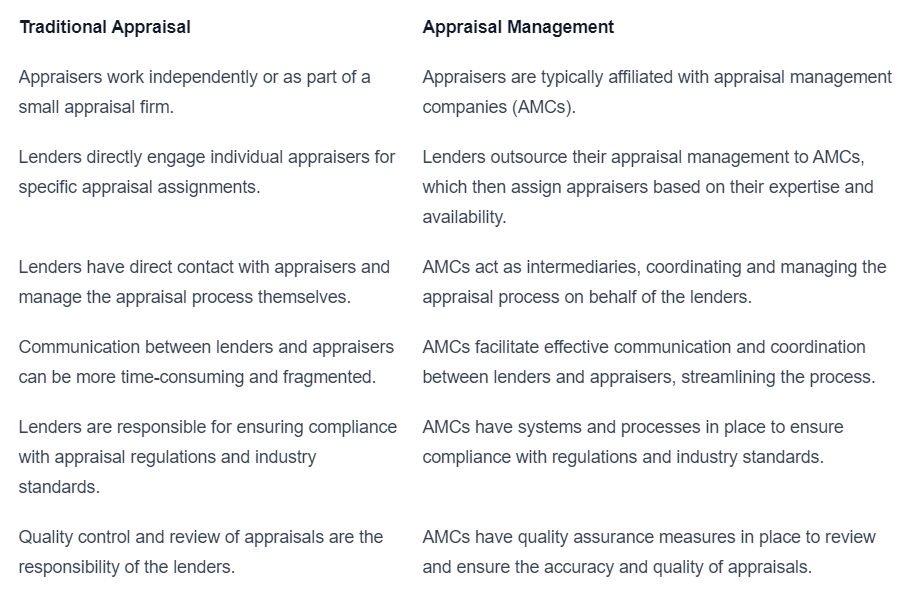
Advantages of Using Appraisal Management
Appraisal management offers several advantages over traditional appraisal methods, making it an attractive choice for lenders and organizations involved in property transactions.
- Efficiency and Streamlined Workflow: By outsourcing the appraisal management process to AMCs, lenders can streamline their workflow. AMCs have established systems and processes in place to efficiently manage appraisal assignments, ensuring timely completion and delivery of appraisal reports. This allows lenders to focus on other crucial aspects of their operations.
- Quality Assurance and Compliance: AMCs have robust quality assurance measures to review appraisals for accuracy, completeness, and compliance with industry standards and regulations. This helps lenders mitigate the risk of inaccuracies or deficiencies in the appraisal reports. Additionally, AMCs ensure that the appraisers they work with meet licensing and certification requirements, further enhancing the quality of the appraisals.
- Effective Communication and Coordination: Appraisal management companies act as intermediaries between lenders and appraisers, facilitating effective communication and coordination. They ensure that lenders' requirements are effectively communicated to the appraisers, and any queries or concerns are addressed promptly. This helps to streamline the appraisal process and reduce potential delays.
By leveraging the expertise and resources of appraisal management companies, lenders can benefit from a more efficient, compliant, and streamlined appraisal process. The use of appraisal management can enhance the overall quality of appraisals while reducing administrative burdens for lenders.
Appraisal Management Regulations
To ensure the integrity and professionalism of the appraisal management industry, there are various regulations and requirements that govern the operations of appraisal management companies. These regulations aim to protect consumers and maintain industry standards. In this section, we will explore some of the key aspects of appraisal management regulations.
Licensing and Certification Requirements
Appraisal management companies are subject to licensing and certification requirements imposed by regulatory bodies. These requirements vary by jurisdiction, but they typically involve obtaining a license or registration to operate as an appraisal management company. The licensing process typically involves meeting certain criteria, such as demonstrating knowledge of appraisal practices, adhering to ethical standards, and providing evidence of financial stability.
Appraisers who work with appraisal management companies may also be required to hold certain certifications or licenses depending on their location. These certifications ensure that appraisers have the necessary qualifications and expertise to perform appraisals accurately and impartially.
Compliance with Industry Standards
Appraisal management companies are expected to adhere to industry standards and guidelines set by professional organizations, regulatory bodies, and government entities. These standards cover various aspects of the appraisal process, including appraisal methodology, report preparation, and ethical conduct.
By complying with industry standards, appraisal management companies help ensure that appraisals are conducted fairly, transparently, and in accordance with best practices. These standards provide a framework for maintaining consistency, accuracy, and professionalism in the appraisal industry.
Appraisal Oversight and Consumer Protection
Regulations surrounding appraisal management also focus on appraisal oversight and consumer protection. Regulatory bodies monitor and enforce compliance with appraisal laws and regulations to safeguard consumers and maintain confidence in the appraisal process.
Appraisal management companies are often required to implement measures to protect the interests of consumers. These measures may include maintaining errors and omissions insurance coverage, implementing quality control procedures, and providing clear communication channels for consumer inquiries and complaints.
Through these regulations, appraisal management companies are held accountable for their actions and are required to operate in a manner that promotes fairness, transparency, and consumer protection.
Understanding the regulations and requirements that govern appraisal management is essential for both appraisal management companies and consumers. By adhering to these regulations, appraisal management companies can provide reliable and trustworthy appraisal services, ensuring that the appraisal process is conducted with integrity and professionalism.
Conclusion
In conclusion, the role of appraisal management in the real estate industry cannot be overstated. Appraisal management companies provide a crucial service by streamlining the appraisal process, ensuring quality and compliance, and facilitating effective communication. By leveraging the expertise of appraisal management companies, lenders and other stakeholders can benefit from a more efficient and reliable appraisal process that enables informed decision-making.
With regulations in place to maintain integrity and professionalism in the industry, it is clear that appraisal management will continue to play a vital role in real estate transactions for years to come.
Sources:
Recent articles

What is Vapor Testing in Appraisals?

What are Residential Appraisals?

How Much Does an AVM Cost?
Your Property, Our Priority
Let us provide you with an appraisal service that combines speed, accuracy, and unparalleled customer service.


